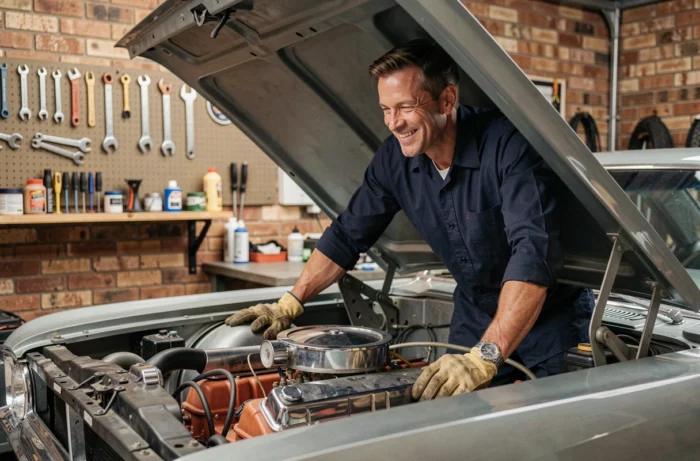
Between the announced revision of the European calendar on the end of thermal engines, the arrival of the Euro 7 standard, and the rise of digital communities, automotive passion is undergoing a period of rapid transformation. Measuring these changes helps to understand what is concretely changing for car enthusiasts, whether they drive a thermal sports car, a plug-in hybrid, or a restored youngtimer on weekends.
Euro 7 Standard and the End of Thermal Engines: What Regulations Change for Enthusiasts
| Regulation | Effective Date | Impact for Enthusiasts |
|---|---|---|
| End of new thermal engines (EU) | 2035, with a review clause | 10% margin considered, compensable by e-fuels or sustainable biofuels |
| Euro 7 (regulation 2024/1257) | November 2026 (new models) | Battery capacity thresholds: 80% at 5 years/100,000 km, 72% at 8 years/160,000 km |
| Euro 7, braking section | November 2026 | First limits on brake particles, including electric vehicles |
The table reveals an often-overlooked point: Euro 7 is no longer limited to exhaust gases. For the first time, battery durability and brake particle emissions are included in the regulatory scope. An enthusiast who keeps their electric or plug-in hybrid vehicle beyond eight years now has a benchmark to assess battery degradation.
On the thermal side, the proposal to relax the 2035 deadline has not yet been adopted. However, it opens the door to sustainable synthetic fuels and biofuels, which could keep some thermal or hybrid models on the market after this date. Enthusiasts following regulatory news on platforms like Automaniacs have a useful information feed to anticipate these changes.
Brake Particles and Low Carbon Steel: Technical Constraints Affecting Automotive Passion
The Euro 7 standard introduces limits on particles emitted from braking. This section concerns all vehicles, including zero-emission models. For a sports driving enthusiast, the choice of brake pads and discs is no longer solely about performance: it becomes a compliance parameter.
The industry is also integrating low carbon steel into the manufacturing of chassis and structural elements. This evolution alters the supply chain for spare parts, with direct consequences on restoration or mechanical preparation costs.
What This Means for Routine Maintenance
- Brake pads will need to meet particle emission standards, steering the market towards specific composite materials, which can sometimes be more expensive.
- Batteries of electric and plug-in hybrid vehicles approved after November 2026 must retain 80% residual capacity at 100,000 km, a criterion verifiable at resale.
- The use of synthetic fuels (e-fuels) on compatible models could become a reason for keeping thermal vehicles on the road after 2035.
These constraints do not kill passion, but they shift the required skills. Knowing how to read a Euro 7 compliance technical sheet becomes as relevant as knowing how to tune a carburetor.
Automotive Culture and Online Communities: Where True Enthusiasts Meet
General forums have given way to structured communities on Discord and thematic groups on social media. French-speaking servers dedicated to mechanics gather thousands of members around specific topics: restoration of classic vehicles, engine preparation, monitoring of regulations.
Video platforms remain the primary vector of automotive culture for enthusiasts. Specialized YouTube channels combine road tests, mechanical tutorials, and market analyses, with a format that has largely replaced print media for those under 40.
Physical Events and Automotive Heritage in France
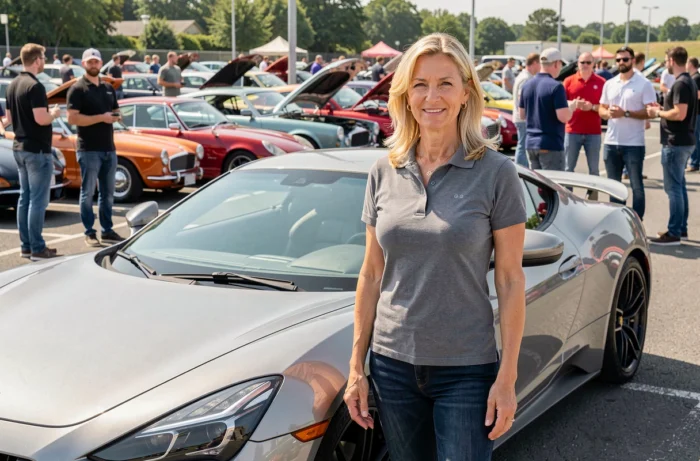
Regional gatherings, concours d’élégance, and specialized shows maintain a function that digital cannot replace: direct interaction with vehicles. Touching a bodywork, hearing an engine, evaluating a restoration in person—these actions form an expertise that video can only partially convey.
On the other hand, the discovery of rare models or hard-to-find parts now almost exclusively occurs through online marketplaces and networks of enthusiasts. The classic vehicle market operates without a dominant central aggregator, making personal networks and community reputation crucial in any transaction.
Synthetic Fuels and Hybridization: What Future for the Passionate Thermal Engine
The European proposal to allow a compensable margin through e-fuels after 2035 does not apply to all engines. Synthetic fuels must be compatible with the vehicle’s architecture, and their production cost remains significantly higher than that of conventional gasoline or diesel.
For thermal car enthusiasts, the central question is not whether the combustion engine will survive, but in what form. Light hybridization is emerging as the dominant technical compromise in new models, including in sporty segments. Manufacturers are integrating enhanced starter-generators and energy recovery systems during braking, even in models designed for dynamic performance.
This technical reality redefines the profile of the enthusiast. Understanding how a 48 V hybrid system works, knowing how to diagnose an energy recovery fault, or assessing the degradation of a traction battery: these skills add to the traditional mechanical foundation without replacing it.
Automotive passion is no longer measured solely by engine revs or the sound of a free-flowing exhaust. It now includes the ability to navigate through shifting regulations, hybrid technologies, and digital communities that structure access to information. The true enthusiast is one who adapts their knowledge to the pace of industry changes, without giving up the pleasure of driving.


