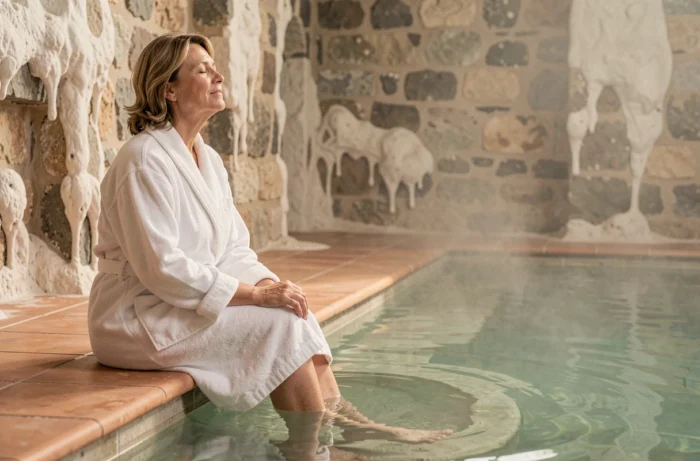
The conventionally recognized thermal cure is based on a protocol of 18 days of effective treatments, prescribed by a doctor, in an accredited facility. This regulatory framework conditions reimbursement by Health Insurance and distinguishes thermal medicine from wellness offers or free mini-cures, which receive no coverage.
Understanding the mechanisms of action of thermal waters, the available clinical evidence, and the conditions for reimbursement allows the cure to be positioned as a fully-fledged complementary treatment, far from the frequent misconceptions on the subject.
Mechanisms of action of thermal waters on chronic conditions
The effectiveness of a thermal cure is not limited to immersion in hot water. Thermomineral products (mineral water, mud, thermal gases) have a specific physicochemical composition unique to each source. Their action combines several pathways: thermal (vasodilation, muscle relaxation), mechanical (hydrostatic pressure, joint mobilization in weightlessness), and chemical (percutaneous absorption of trace elements, local anti-inflammatory effect).
We observe that this triple synergistic action explains why thermal treatments cannot be substituted by a simple hot bath at home. The daily repetition of treatments over 18 days generates a documented cumulative effect, with improvements lasting several months after the end of the cure.
The most commonly prescribed therapeutic orientations concern rheumatology and respiratory pathways, but thermal medicine also covers conditions of the buccal-lingual mucosa, cardiovascular diseases, or psychosomatic disorders. Each orientation involves specific treatment techniques: jet showers, baths with aerotherapy, mud packs, nasal sprays, or vaginal irrigations depending on the indication.
Referenced establishments on capsan.fr allow for the identification of accredited thermal stations according to the desired therapeutic orientation, facilitating the choice for patients and prescribers.
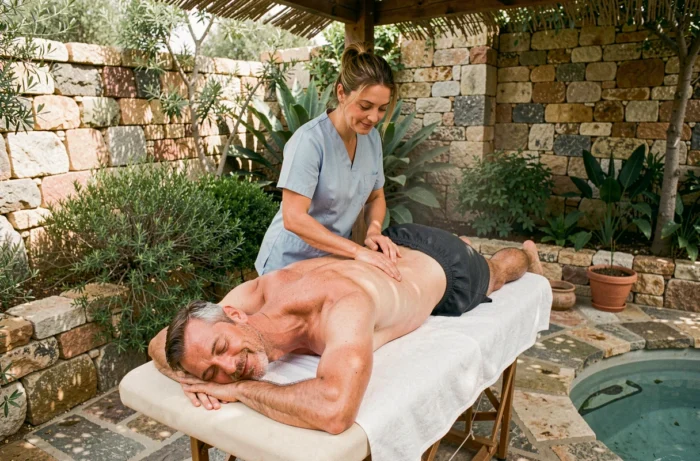
Clinical studies and evidence of effectiveness in thermal medicine
Thermalism has long suffered from a lack of scientific evidence. Since the early 2000s, randomized clinical trials have gradually documented the benefits of the thermal cure in several indications.
In rheumatology, studies have shown an improvement in pain and joint function maintained over several months, with a measurable reduction in the consumption of analgesics.
These results place thermal medicine within a framework of evidence-based medicine. The cure does not claim to cure a chronic disease, but it reduces pain, decreases medication consumption, and improves quality of life over an extended period.
Reimbursement of thermal cures and regulatory stability
The reimbursement of a conventionally recognized thermal cure by Health Insurance remains subject to specific conditions. The prescription must come from the treating physician or a specialist. Only the 18-day cure in an accredited establishment entitles one to coverage, while mini-cures or free stays are excluded.
The reimbursement rate covers part of the thermal treatments and, subject to income conditions, the accommodation and transport package. The out-of-pocket expense for the patient varies according to their situation, and a complementary health insurance may cover all or part of this difference.
One point deserves to be highlighted: the debate on a potential delisting of thermal cures took place within the framework of the 2026 Social Security budget. The measure was ultimately not adopted, confirming regulatory stability for patients and prescribers. This decision reflects the recognition by public authorities of the medical service provided by thermalism, despite recurring budgetary pressures.

Profile of patients and long-term conditions
The thermal cure is not reserved for seniors seeking joint comfort. The actual profile of patients reveals a significant proportion of individuals with long-term conditions (LTC), particularly in rheumatology and cardiovascular pathology. These patients, for whom the disease is long-standing, find in the cure a complementary treatment that fits into a comprehensive care pathway.
Rheumatology remains the dominant orientation. Osteoarthritis, chronic low back pain, fibromyalgia, and inflammatory rheumatism are the most frequent reasons for prescription. In the background, respiratory conditions (asthma, chronic sinusitis, bronchitis) and anxiety or stress-related disorders represent growing orientations.
We recommend considering the thermal cure not as an isolated treatment, but as a lever for therapeutic education. The break from daily life, combined with the learning of preventive measures (adapted physical activity, stress management, dietary hygiene), amplifies the effects of thermal treatments well beyond the 18 days of treatment.
Thermal medicine occupies a unique position in the French healthcare system: it combines a strict regulatory framework, solid clinical evidence, and a holistic approach to the patient. For chronic conditions where drug treatments show their limits, the cure remains a therapeutic tool whose medium-term effectiveness is documented by controlled trials. The maintenance of reimbursement in 2026 confirms this place in the care arsenal.


