
Eco-friendly interior decoration is no longer limited to choosing a raw material placed on a shelf. The European regulatory framework is evolving, recycling channels are becoming structured, and the available finishes are catching up with conventional ones. Here are ten concrete ideas for creating a sustainable interior without aesthetic compromise.
1. Indoor Plants: Air Filtration and Plant Architecture

Indoor plants serve not only as a green touch. Certain species (spathiphyllum, chlorophytum, ficus elastica) help regulate humidity and capture volatile organic compounds emitted by glues and varnishes.
We recommend working in layers: tall plants (ficus lyrata, strelitzia) at the back of the room, medium ones on consoles, and trailing plants in macramé hangers. This principle of verticality structures the space as much as a light partition.
On the substrate side, peat-based potting soils pose a real ecological problem. Favor mixtures based on coconut fiber and perlite, which are less resource-intensive.
2. Furniture Made from Recycled Materials: Traceability and Structural Strength
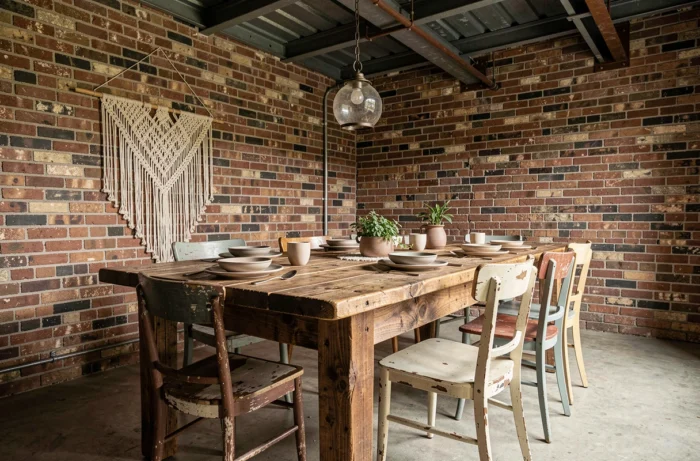
Furniture made from recycled materials has long suffered from a lack of trust regarding its mechanical durability. The sectors have professionalized: high-density recycled fiber boards, re-melted steel, marine HDPE plastic transformed into legs. Strength is no longer a compromise.
A point of caution: check that the manufacturer documents the origin of the materials. The European regulation ESPR (Regulation (EU) 2024/1781), which came into effect on July 18, 2024, provides for a digital product passport for furniture by 2029-2030. Brands that already provide a detailed traceability sheet anticipate this obligation and offer additional guarantees. To explore different approaches to decor on the site maisonsalternatives.fr, product sheets are a good benchmark for seriousness.
3. Eco-responsible Decorative Objects: Beyond Greenwashing
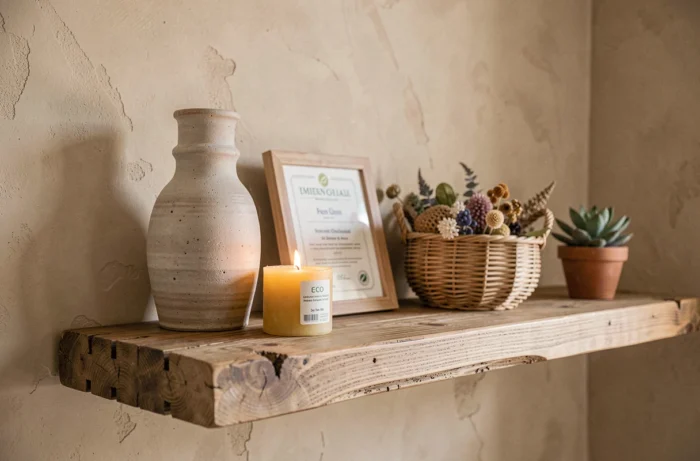
The market for eco-responsible decorative objects is saturated with vague claims. We observe that reliable labels remain few: EU Ecolabel for paints and varnishes, FSC or PEFC for wood, GOTS for textiles. An object that simply states “eco-friendly” without verifiable certification guarantees nothing.
A hand-blown recycled glass vase is worth more than an industrial batch stamped green. Look for the mention of the percentage of recycled material integrated and the location of the manufacturing workshop.
4. Natural Textiles: Weight, Weaving, and Care
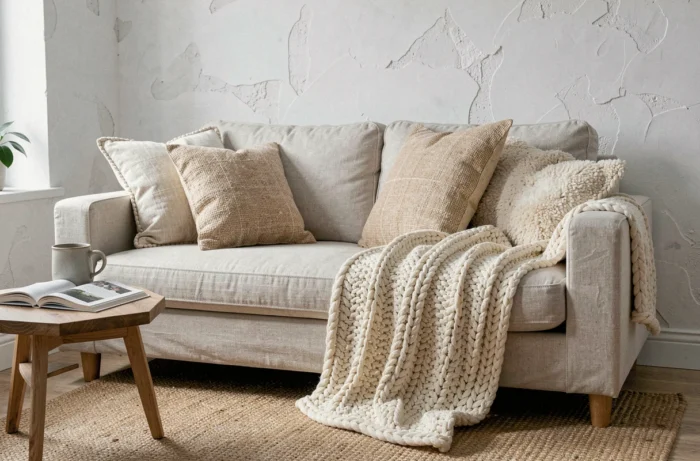
Linen, hemp, certified organic cotton (GOTS), untreated wool: natural textiles provide thermal comfort and texture. French linen, grown in Normandy and Picardy, offers a particularly low carbon footprint due to its low water and input requirements.
For curtains, a sufficiently dense weight filters light without resorting to synthetic linings. Jute or sisal rugs are suitable for dry rooms but do not withstand humidity well: avoid them in the bathroom.
5. Sustainable Lighting: LEDs and Bio-sourced Fixtures
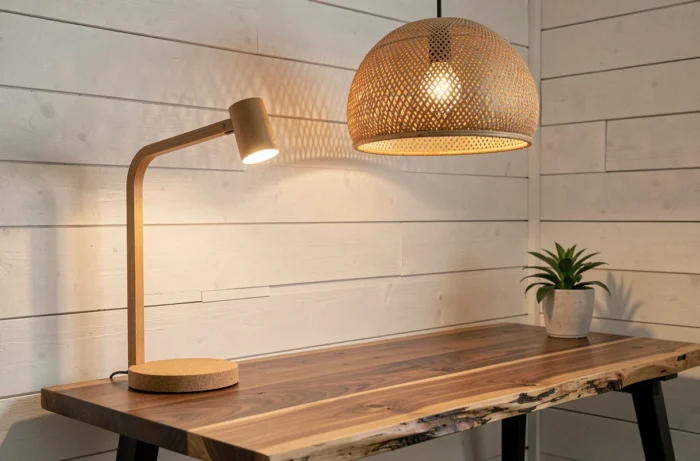
Sustainable lighting combines two axes: the light source and the fixture itself. LEDs consume a fraction of the energy of incandescent bulbs and last significantly longer.
Fixtures made from bamboo, rattan, or woven fibers are a better replacement for molded plastic. Ensure that the bamboo used has not undergone heavy chemical treatment (formaldehyde). Finishes with linseed oil or beeswax are sufficient to protect the fiber.
6. Eco-friendly Paints: VOCs, Composition, and Finish
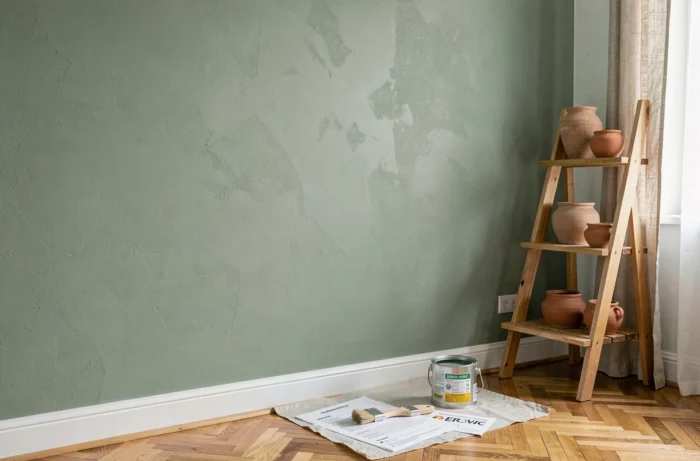
Bio-sourced paints with low VOC content have caught up with conventional paints in terms of coverage and color palette. The key criterion remains the content of volatile organic compounds, expressed in grams per liter, and framed by European directive 2004/42/EC.
Paints bearing the EU Ecolabel comply with much stricter thresholds than the minimum regulation. Lime or casein-based paints are suitable for interior walls and offer the sought-after deep matte finish in contemporary interiors.
7. Decoration with Reclaimed Wood: Species, Drying, and Finishes
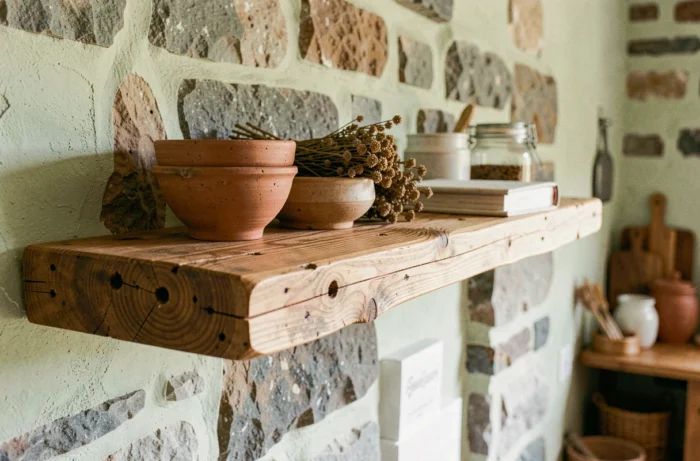
Reclaimed wood (demolition beams, selected pallet boards, driftwood) brings a raw character that new wood cannot replicate. The key lies in drying: poorly dried wood warps and can develop mold.
We recommend checking the residual moisture content before any implementation. Natural hard oil finishes (linseed, tung) protect without creating a plastic film on the surface. Certified reclaimed wood without CCA treatment (copper, chromium, arsenic) is the only one suitable for indoor use.
8. Accessories Made from Local Raw Materials: Short Circuits and Know-how
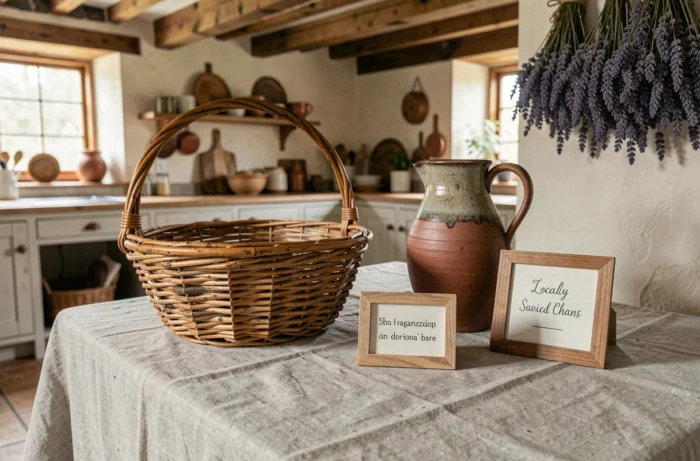
Ceramics made in France, wickerwork from willow, local stone: local raw materials reduce transport and support artisanal sectors. The ESPR 2025-2030 plan classifies furniture among priority categories, which should also encourage transparency regarding the origin of decorative components.
A simple criterion: if the manufacturer can name the location of harvest or extraction of their raw material, you are on a verifiable short supply chain.
9. Second-hand Furniture: Inspection and Restoration
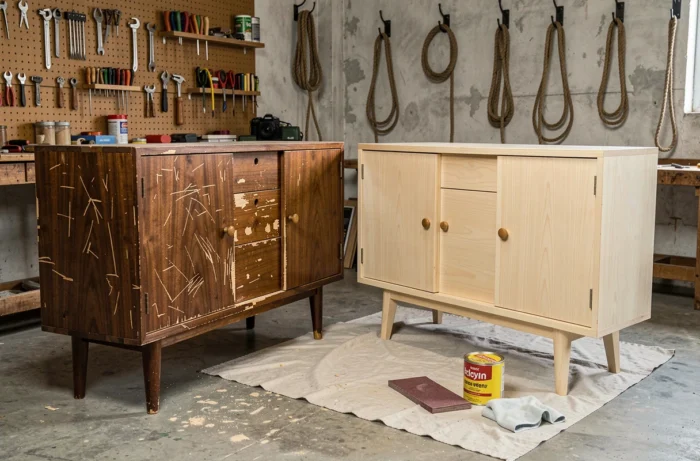
A well-inspected second-hand piece protects just as well as a new piece. The second-hand market has become structured with specialized platforms and professional restoration workshops.
Points to check before purchase:
- Stability of joints (tenons, dowels, screws) and absence of structural play
- Condition of coverings: a worn fabric can be replaced, a cracked frame much less easily
- Possible presence of lead in old paints on furniture made before the 1950s
10. Biodegradable Decorative Elements: Temporarily Designed
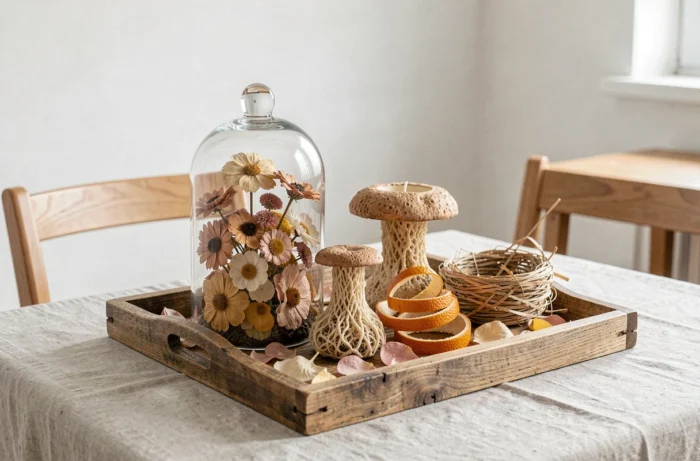
Biodegradable elements (paper kraft garlands, pressed coconut fiber pots, vegetable wax candles cast in compostable containers) meet a need for seasonal decoration without waste accumulation.
Their limited lifespan is an advantage, not a flaw: it invites a renewal of the ambiance without storage. Check that the inks and glues used are also biodegradable; otherwise, home composting remains compromised.
Eco-friendly decoration is becoming technically rigorous every year. The future digital product passport will make traceability readable for everyone, but nothing prevents applying these selection criteria to every purchase right now.


