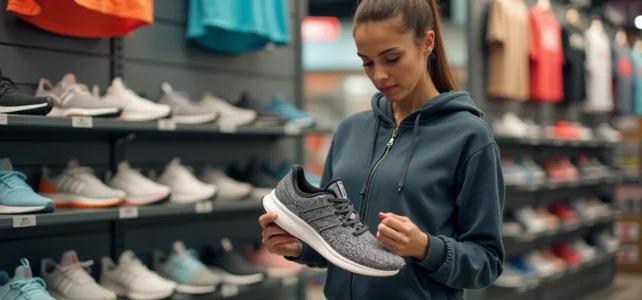
Buying a pair of running shoes without knowing your stride, or investing in a weight bench before testing the movement without weights: these mistakes can be costly and hinder progress. Choosing the right sports equipment relies on a few concrete criteria, often simpler than one might think, as long as they are examined in the right order.
Sports Shoes: The First Purchase Not to Miss
Have you ever felt knee pain after a jog in shoes that are too flat? The problem rarely lies in your technique. It comes from the sole.
The shoe is the only piece of equipment that directly absorbs the shocks between your body and the ground. For running, cushioning and foot support take precedence over aesthetics. A model suited to your type of stride (pronator, supinator, or neutral) reduces stress on the joints.
Specifically, before buying, visit a store that offers a gait analysis on a treadmill. This assessment takes a few minutes and directs you towards the right category of shoe. For indoor sports (fitness, badminton, handball), choose a non-marking sole with good lateral support, as the movements are multidirectional.
A useful guideline: if you practice two to three times a week, replace your shoes as soon as the midsole (the cushioning layer between the outer sole and the inside) appears compressed or uneven. The perceived comfort decreases before wear becomes visible.
To compare the available ranges according to your discipline, the equipment offered by Bonjour Sportif allows you to filter by sport and practice level.
Connected Equipment: What GPS Watches and Sensors Are Really Worth
GPS watches and heart rate sensors are no longer reserved for competitors. They have become mainstream, but their usefulness depends on how you use them.
A beginner in running benefits directly from a simple heart rate monitor. Running in the right heart rate zone prevents you from starting too fast and exhausting yourself after ten minutes. It’s a natural brake that teaches consistency.
For an intermediate or advanced practitioner, the selection criteria change. Compare the supported sports profiles, GPS accuracy, and software longevity (updates, compatibility with training apps). A watch that is no longer updated after two years loses part of its value.
- Running and triathlon: opt for a model with multiband GPS and training load metrics (recovery time, estimated VO2 max).
- Fitness and weightlifting: a simple heart rate tracker is sufficient, paired with an app that records your sets and weights.
- Hiking: built-in mapping and a barometric altimeter matter more than the precision of physiological data.
Before spending, ask yourself a simple question: what data will you actually check after each session? If the answer is limited to distance and duration, an entry-level model will do the job.
Budget and Progressive Equipment: Start Light Without Sacrificing Quality
The temptation to buy all the equipment right from the start is strong, especially when starting an activity at home. However, a well-chosen minimal equipment is better than a garage full of unused gear.
Take the example of a home gym. Three elements are enough to cover the majority of bodyweight and weighted strength movements: a thick floor mat, a pair of adjustable dumbbells, and a pull-up bar to be fixed in a door frame. With these three pieces, you can work on your upper body, core, and legs (weighted squats, lunges).
Add equipment only when an exercise becomes too easy or when your program requires a movement you cannot replicate. An adjustable bench, for example, only becomes relevant when push-ups and standing presses are no longer sufficient for progressing on the chest and shoulders.
This reasoning also applies to outdoor sports. In trail running, for example, a breathable waterproof jacket and spiked shoes cover the majority of outings. The hydration pack, folding poles, or headlamp can be added later, depending on the distance and elevation you aim for.
Safety Standards for Helmets and Protective Gear: Check Before You Buy
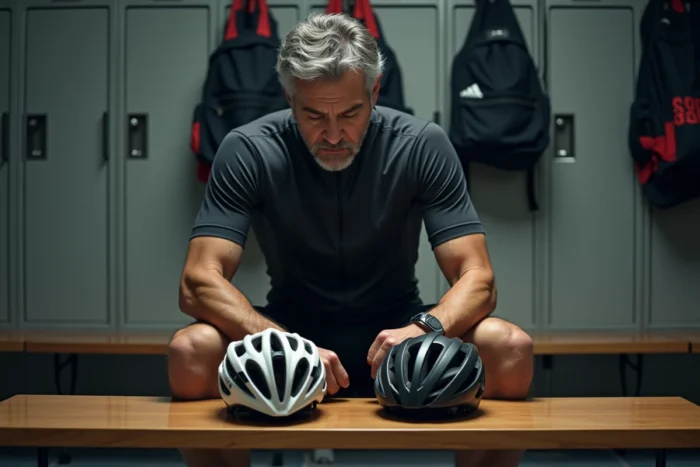
Bicycle, ski, or combat sports helmets are subject to safety standards that evolve regularly. A helmet that complies at the time of purchase may no longer meet updated requirements a few years later.
Check the standard indicated on the inner label of the helmet before any purchase, including second-hand. For bicycles, the current European standard guarantees a level of shock absorption tested in a laboratory. For skiing, a distinct standard covers high-speed impacts and negative temperatures.
Beyond the standard, three practical criteria determine the effectiveness of a helmet:
- Fit: the helmet should not move laterally or compress the forehead. A micrometric tightening system (occipital dial) allows for precise adjustment.
- Ventilation: a poorly ventilated helmet ends up on the handlebars or in the bag. Sweating leads many practitioners to remove their protection during intense effort.
- Replacement after impact: even without visible cracks, the internal structure (expanded polystyrene) deforms upon impact. A helmet that has sustained a significant impact must be replaced.
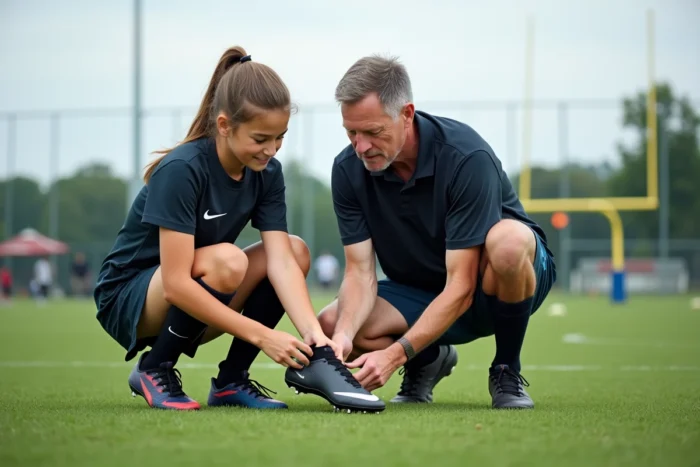
This verification principle also applies to shin guards, boxing gloves, and technical knee pads. Worn or poorly sized protective gear gives a false sense of security, which can sometimes be worse than having no protection at all.
Sports equipment does not need to be expensive or abundant to fulfill its role. Starting with shoes, adding a measurement tool suited to your level, investing progressively, and checking safety standards on each piece of protection: these four steps cover the vast majority of needs, from the casual jogger to the dedicated practitioner.