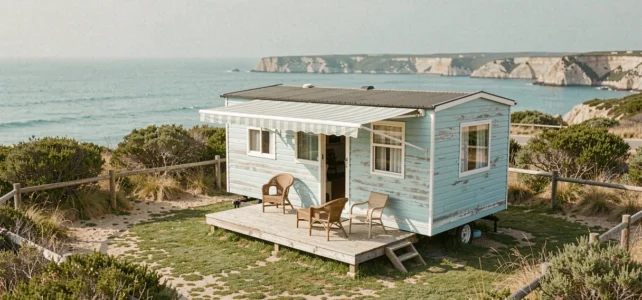
A mobile home installed on a plot by the sea is not considered real estate. The Urban Planning Code classifies it as a mobile leisure residence, provided it retains its means of mobility (wheels, chassis, tow bar). This legal qualification determines the applicable taxation, occupancy rights, and resale conditions.
In 2026, the market for selling land with mobile homes on the French coast is evolving due to combined regulatory pressures, climate constraints, and a geographical repositioning of demand.
Coastal Erosion and Climate Constraints: A Factor Buyers Underestimate
Content about mobile homes by the sea focuses on purchase price and accessibility. One parameter remains under-discussed: the risk of coastal erosion, which directly affects the viability of certain coastal plots.
Several Atlantic and Mediterranean facades are experiencing a slowdown in transactions linked to new development constraints in exposed areas. Coastal municipalities are now incorporating the retreat of the coastline into their urban planning documents, which may render certain plots unsuitable for the permanent installation of a mobile home.
For a buyer, this means checking two elements before making any commitment: the classification of the land in the coastal risk prevention plan, and the remaining duration of use authorized by the municipality. A campsite located in a high-risk area may see its operating permit not renewed in the medium term, rendering the plot unusable. Therefore, the sale of land with a mobile home by the sea requires an analysis of natural risk just as much as of the budget.

Prefectural Controls and Almost Permanent Occupation: What Changes in 2026
Since 2023-2024, several prefectures have intensified controls on mobile homes used as quasi-permanent residences in coastal areas. This trend is expected to increase in 2026.
The mobile home remains legally a leisure dwelling. Occupying it year-round in a traditional campsite exposes one to administrative sanctions if the internal regulations or municipal decree do not allow it. Some campsite managers tolerate prolonged occupation without a clear contractual framework, which weakens the buyer’s position in case of dispute.
Residential leisure parks (PRL) offer a more stable framework for long-term occupation, but their number remains limited along the coast. Before purchasing, it is essential to distinguish between two situations:
- In a campsite, the owner of the mobile home is a tenant of the plot. The manager can modify the annual rent, impose age rules on the mobile home, or refuse to renew the contract.
- In a PRL with plot transfer, the buyer acquires a real right on the land, which secures the occupation but increases the entry cost.
- On private non-buildable land, the installation of a mobile home is subject to strict conditions (prior declaration, connection to networks) and remains prohibited in many coastal municipalities subject to the Coastal Law.
Checking the exact status of the land and the type of contract offered is a prerequisite for any transaction. A mobile home purchased on a plot with an unclear legal framework can lose all usage value within months.
Geographical Shift to Brittany and Normandy: Rental Trend 2026
The vacation trends for 2026 confirm a shift in interest towards more temperate coastal areas. Brittany and Normandy are gaining attractiveness, driven by less extreme summers and a still accessible camping offer.
This shift in demand has a direct effect on the mobile home market. Plots located on these northern and western facades benefit from a rising rental potential, while some Mediterranean resorts see their summer attendance stagnate due to repeated heatwaves.
For an investor considering seasonal subletting, the choice of region determines the occupancy rate. A mobile home in southern Brittany can now generate rental income comparable to that of a Vendée plot, often with a lower acquisition cost.

Relaxation of Age Rules in the Second-Hand Market
Several campsites have relaxed their age rules to retain their residents longer and amortize their existing stock. A mobile home over fifteen years old, once systematically refused, can now remain on certain plots under conditions.
This evolution supports the second-hand market but alters the resale logic. A second-hand mobile home retains its usage value better than before, provided the campsite agrees to extend the contract. The buyer must obtain in writing the remaining acceptance duration before signing.
Balancing Mobile Homes and Coastal Real Estate: Energy Performance Comes into Play
In the coastal real estate market, buyers are now considering energy performance and potential renovations just as much as the sea view. This shift in criteria indirectly benefits mobile homes: recent models offer decent insulation and controlled heating costs, without the obligation of an energy performance certificate (DPE).
The choice between an old apartment in a seaside resort (often rated E or F on the DPE, requiring heavy renovations) and a new mobile home on a camping plot is becoming more common. The mobile home does not constitute real estate in the strict sense, but its overall entry cost remains a fraction of the price of a traditional coastal property.
This comparison has its limits. The mobile home depreciates from the first year, while a real estate property may increase in value. Annual plot fees (rent, charges, maintenance) accumulate without constituting savings. Purchasing a mobile home by the sea remains a choice of comfort and usage, not a wealth strategy.
The coastal mobile home market in 2026 is structured around constraints that commercial brochures do not highlight: risk of erosion, tightening controls on long-term occupation, mechanical depreciation of the property. The most informed buyers favor PRLs with plot transfer, check the land classification in risk zones, and negotiate in writing the duration of acceptance of the mobile home by the manager.