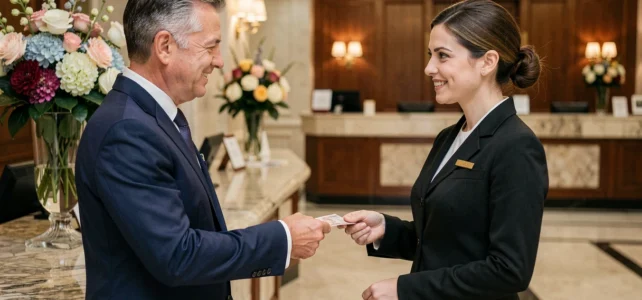
In France, service is included in the bill. This legal particularity makes tipping optional in all establishments, including palaces and five-star hotels. The gesture remains voluntary, but staff expectations vary depending on the position held, the type of service, and the country where the hotel is located. Understanding these nuances allows one to act appropriately, without awkwardness or excess.
Tipping Hotel Housekeeping: Why to Leave It Every Day
Housekeeping teams operate on a rotation basis. The person who cleans your room on a Monday is not necessarily the same one who comes in on Tuesday. Leaving a single amount at the end of your stay often means rewarding only the last person who came, sometimes the one who did the least work on your room.
Leaving a bill each morning, on the nightstand or desk, with a brief note (“thank you” or “for housekeeping”) avoids any ambiguity. Without written indication, staff may confuse the bill with forgotten change and not take it. This practical detail regularly emerges from feedback from travelers and recent guides on luxury hospitality.
Knowing how to tip in a five-star hotel first requires understanding this rotation logic, which applies in Europe, North America, and Southeast Asia.
Tip Amounts According to Hotel Staff in a Five-Star Hotel
Not all staff members perform the same function, and the expected amount varies accordingly. Here are the most relevant positions in a high-end establishment.
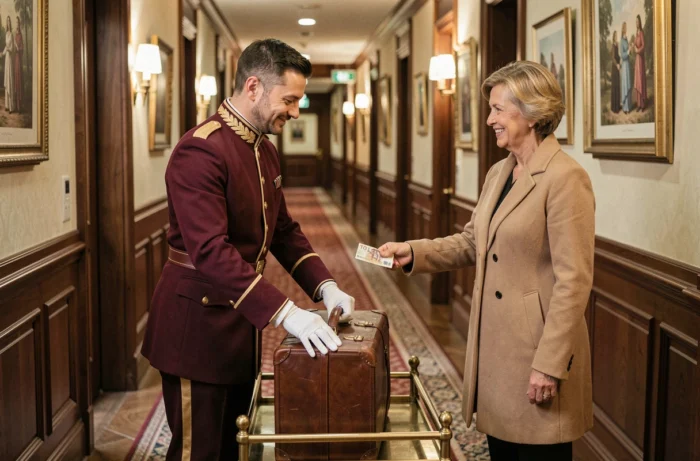
- The bellhop, who carries your luggage from the entrance to the room, generally receives a few euros per bag transported. The gesture is made at the time of handing over the luggage, in person.
- The housekeeper or valet benefits from a daily tip left in the room. The amount depends on the hotel’s standing and the country, but the regularity of the gesture matters more than the sum.
- The concierge is not always tipped for standard information (restaurant hours, neighborhood map). Tipping the concierge is justified for a complex or exceptional request: last-minute reservation at a fully booked restaurant, organizing a private transfer, obtaining tickets for an event.
- The valet, when the hotel has a parking service, receives a tip each time the vehicle is retrieved.
Room service requires prior verification. The room service bill sometimes already includes a service charge. Before adding anything, read the bill line by line. If a mention of “service included” or “gratuity included” appears, an additional tip is not necessary, unless the service was truly remarkable.
Tipping in Europe, the United States, and Asia: Differences to Know
Practices vary significantly from one country to another, and applying American codes in a Parisian or Japanese hotel creates a mismatch.
Europe: Service Included, Gesture Appreciated
In France, Belgium, and most European countries, the price of service is included in the bill. Tipping remains a voluntary supplement, perceived as a sign of satisfaction. Amounts typically hover around a few euros per service. In Switzerland, service is also included, but rounding up the bill is common and well-regarded.
United States and Canada: Tipping as a Component of Salary
The North American context changes the game. Hotel staff in the U.S. partly depend on tips to supplement their income. The expected amounts are significantly higher than in Europe. Not leaving anything in a five-star hotel in New York would be seen as an affront, while the same behavior would go unnoticed in Madrid or Rome.
Asia: Codes to Respect to Avoid Faux Pas
In Japan, tipping can be refused or even misinterpreted. In mainland China, the practice is not ingrained in habits, even in high-end hospitality. However, in tourist destinations like Thailand or Indonesia, the gesture is appreciated and expected in establishments frequented by international clientele.

Digital Tipping in Luxury Hotels: A Still Marginal Option
Several markets are seeing the emergence of digital tipping solutions (QR code, dedicated app, contactless payment). In practice, digital tipping remains rare in French hospitality. Most five-star establishments in Europe continue to operate with cash for this type of gratuity.
This situation raises a practical question: should you prepare small bills before the trip? In most cases, the answer is yes. Withdrawing local currency upon arrival, favoring small denominations, simplifies every interaction with the staff.
In the United States and Canada, some high-end chains are testing digital envelopes or additions to the final bill, but feedback on the effectiveness of these systems varies. Staff often prefer cash, which is immediately available and not subject to an internal redistribution circuit.
Discretion and Timing: Two Criteria That Change the Perception of Tipping
The amount matters, but the manner of giving weighs just as much in a high-end environment. Slipping a folded bill into a handshake remains the most common gesture for a bellhop or valet. For housekeeping, placing the bill prominently with a handwritten note works better than leaving a bill abandoned on the bed.
Tipping is given at the time of service rendered, not afterward. Thanking a concierge three days after their assistance loses impact. Timing reinforces the connection between the gesture and the service.
Avoid handing a tip in front of other guests in a common area like the lobby. Discretion protects both the staff (who may have internal constraints on accepting gratuities) and yourself.
Tipping in a five-star hotel does not follow a universal pricing grid. The country, the staff position, the nature of the request, and the available payment method together determine what is appropriate. Preparing cash in small denominations, checking the room service bill, and adapting the gesture to local codes cover most situations encountered.