
SNCF has a clear stance: a train ticket is nominative, personal, and non-transferable. Changing the name of the traveler on an already issued ticket is officially not provided for by the carrier. This rule, often discovered at the moment the mistake is made, generates legitimate frustration among travelers who have simply swapped two letters or booked for the wrong person.
The framework is strict, but practice reveals areas of flexibility. Between the tolerance of controllers for a typo, the possibility of canceling and then re-purchasing a ticket, and the periods of free exchanges related to exceptional events, several options exist to circumvent this rigidity.
Name on the SNCF ticket and name on the Connect account: a distinction to grasp
One point that travelers often confuse is the difference between the information linked to the SNCF Connect account and that printed on a ticket. Changing your name in the account has no effect on tickets already issued. A change of name due to marriage, for example, can be recorded in the personal space, but it will only apply to future bookings.
For tickets already purchased, the only option remains to cancel followed by a new purchase in the correct name. This distinction particularly traps those who have just changed their marital status and think that updating their profile is enough to correct all their planned trips.
Before taking any steps, it may be useful to understand the complete procedure to change the name on an SNCF ticket in order to assess the available options depending on the type of ticket concerned.
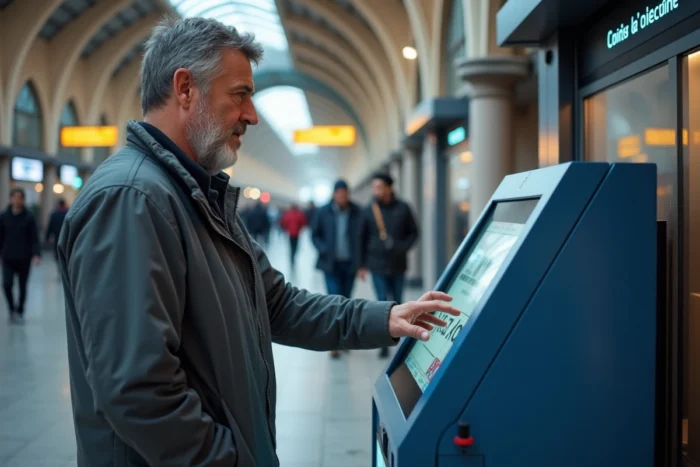
Tolerance of SNCF controllers in case of minor errors in the name
Since the generalization of the nominative e-ticket on smartphones, control relies on the QR code and the consistency between the displayed name and the traveler’s ID. In practice, controllers do not systematically note small spelling errors as long as the traveler is clearly the same person.
A missing letter, a forgotten accent, or a truncated compound first name generally pass without difficulty. On the other hand, a completely different name (booking in someone else’s name, for example) will be spotted during an identity check and may lead to a regularization on board.
This margin of tolerance does not constitute a right. It depends on the controller’s assessment and the context (TGV Inoui line, Ouigo, TER). On Ouigo, identity checks are more frequent than on other services, which reduces the leeway in case of a significant error.
Cancellation and re-purchase of ticket: the method that really works
Since changing the name is technically impossible, the most reliable strategy is to cancel the existing ticket and then buy a new one in the correct name. The effectiveness of this method entirely depends on the fare conditions of the initial ticket.
What the different fare ranges allow
- Exchangeable and refundable tickets (Second Flexible range, First, etc.) allow for cancellation with full or partial refund, making the re-purchase almost painless financially
- Discount or promotional tickets (Ouigo, Prem’s price) are often non-refundable or subject to cancellation fees, which implies a financial loss if the new ticket must be repurchased at the current price
- TER tickets purchased without mandatory reservation pose fewer problems: they are generally not nominative in the same way as a TGV, and identity checks are rare
Before canceling, one must check the conditions from the SNCF Connect space or the app, in the “My trips” section. Refunds are made to the original payment method, and the time frame varies from a few days to two weeks depending on the case.
Lost ticket or no booking reference
In case of losing the booking reference, the SNCF customer service can retrieve the ticket using the email address used during purchase, the travel date, and the departure and arrival stations. This option prevents being stuck if the confirmation email has been deleted.
Free exchanges during exceptional periods: a window to exploit
SNCF regularly announces periods when exchanges and refunds become free for the majority of TGV Inoui, Ouigo, and Intercités tickets. These windows open during exceptional events: heatwaves, massive strikes, major incidents on the network.
These periods allow for indirectly circumventing the impossibility of changing the name. The traveler cancels their ticket for free, then re-buys one in the correct name, without bearing the usual exchange fees. The difficulty lies in the fact that these announcements are unpredictable and limited in time.
To take advantage of this, one must monitor the official communications from SNCF Voyageurs and act quickly. The cheapest tickets sell out quickly during these periods, as many travelers take the opportunity to modify their bookings.

Changing the name on a ticket purchased via a third-party reseller
Tickets purchased on platforms like Trainline or other authorized resellers follow specific rules. Trainline indicates that the possibility of changing the name depends on the carrier and the type of ticket. For SNCF tickets sold through these platforms, SNCF’s policy applies: changing the name remains impossible.
Cancellation and refunds, however, go through the reseller, not directly through SNCF. The time frames and fees may differ from those practiced on SNCF Connect. One must contact the customer service of the purchasing platform to know the exact terms.
A ticket purchased on a third-party site cannot be managed from the SNCF Connect app, which complicates last-minute procedures at the station. It is better to anticipate and address the issue from the interface where the purchase was made.
The rigidity of the SNCF system regarding name changes encourages a simple habit: systematically check the spelling of the first and last name before confirming a booking. For regular travelers, saving the profiles of companions in the SNCF Connect account reduces the risk of input errors, and it is probably the most effective precaution against a policy that, for now, shows no signs of softening.